Literature, Art, Wine, and Jazz

September 2026
As part of several grant projects, NVFCP Executive Director Rayette Martin has had the opportunity to research and write about Lincoln County history. She was recently invited to table at a community event celebrating the spirit, history, and culture of the area.
The event featured a magnificent collection of photography from the annual photo festival, displayed throughout the historic Caliente Depot. Six authors had tables where they shared their publications with attendees, who also enjoyed light refreshments and jazz music. It was a great opportunity to connect with a variety of community members and share the preservation message.
NVFCP handed out copies of People, Places, and History of Lincoln County, written by Rayette Martin while she was contracted with the Nevada Site Stewardship Program through a Lincoln County Archaeological Initiative (LCAI) grant. Under similar circumstances, Rayette also authored a BLM Archaeology Junior Ranger Book, which was illustrated by NVFCP President Katie Hoffman. She also shared an LCAI funded book by the Nevada Rock Art Foundation titled Rock Art: Ancient Cultural Landscapes of Lincoln County.
Events like this provide a wonderful opportunity to share the stories and publications that help preserve and celebrate Lincoln County’s rich history.
To learn more about the historic venue, check out the NVFCP history blog article, “Caliente Railroad Depot: Surviving History in Lincoln County.”
Check out the authors:


September 21, 2026
Little Red Rock Management Update
September 2026
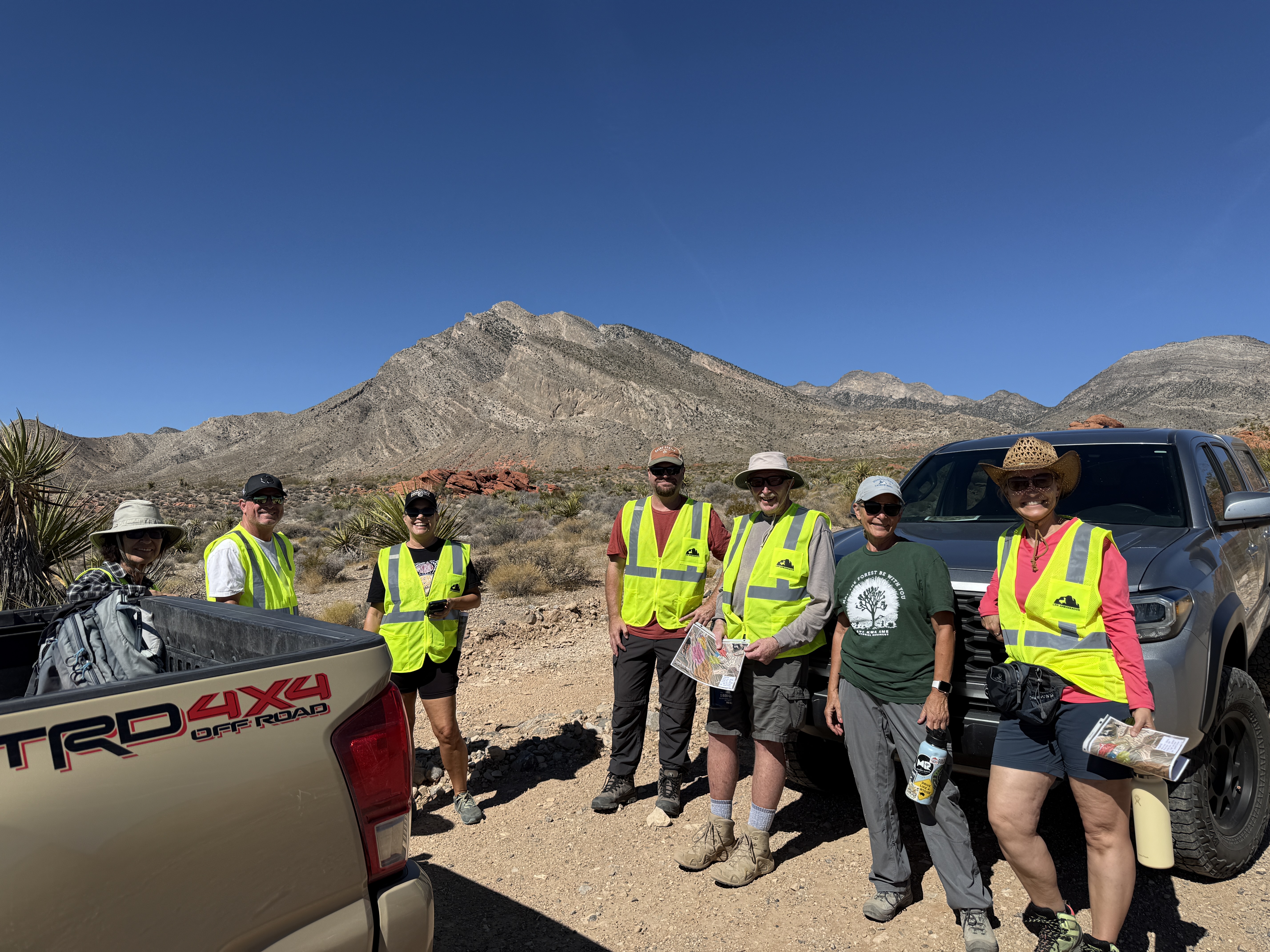
Managing an important Native American cultural area next to ongoing development is challenging, to say the least.
This month, we welcomed seven individuals to our team to assist with monitoring trespassing activity, damage to the area, trash, trails, and other impacts resulting from human visitation. These specially trained Ambassadors will play an important role in helping guide future management decisions while making invaluable contributions to the preservation and protection of this culturally significant area.
One surprising finding is that people continue to access the area during the summer months, even when temperatures reach triple digits. This continued visitation highlights the importance of monitoring the area and understanding how people are using it throughout the year.
Illegal climbing routes, including some bouldering, are also becoming an increasing concern. We are working with the Southern Nevada Climbing Coalition to explore potential solutions and determine how best to protect the area while addressing these activities.
There are also two fall and winter cleanup events scheduled. Check out our Events page for more information and opportunities to get involved.
September 21, 2026
Labor Day Festivities & Historic Movie House Talk/Movie Screening
 September 2026
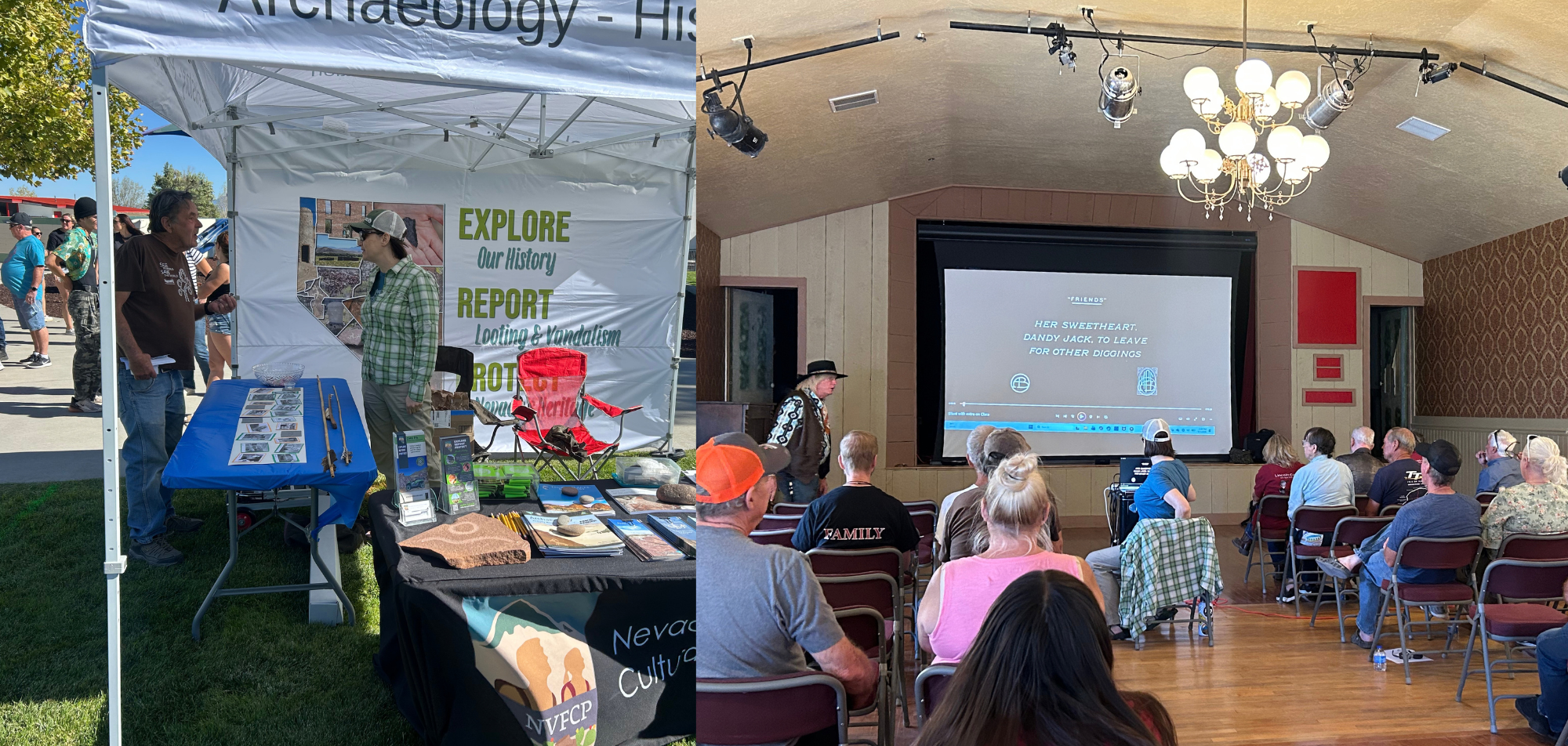
The Annual Labor Day Festival is the biggest event of the year in Pioche, Nevada, drawing locals and visitors from around the region for a nonstop lineup of events. This year, NVFCP hosted an outreach booth featuring a timeline that connected the history of candy to important dates in both Pioche and U.S. history.
Did you know that Necco Wafers date back to 1847 and the still-beloved Tootsie Roll was introduced in 1896? Between those two dates, the United States experienced the Civil War, Nevada became a state, and the Pioche silver boom brought more than 7,000 people to town. As Pioche grew into a bustling mining community, facilities were built to entertain and serve its residents.
For our presentation, guests got to snack on a variety of historic treats while we explored the stories of two of Pioche’s historic movie houses. NVFCP Executive Director Rayette Martin covered the history of Thompson’s Opera House as well as some of the history of the GEM Theater. She then welcomed guest speaker Daniel Roberts, who shared the story of the GEM’s renovation journey.
Ron Safran took things from there, adding fascinating information about silent-film stars Clara Bow and Rex Bell, who were associated with Walking Box Ranch (1931), a historic ranch in Searchlight, Nevada. The ranch has since been restored, and tours are provided by the Friends of Avi Kwa Ame. Ron also introduced us to the world of silent film through a feature film and several short clips of Clara Bow.
Fun fact: Rex Bell served as Lieutenant Governor of Nevada. Talk about some major Nevada history!
Pioche’s Historic Theaters
Brown Hall was built in 1873 and later became Thompson’s Opera House in 1891. The building was restored with grant funding and reopened for community use in 2009.
The GEM Theater was built in 1937 by neighboring Thompson’s. In 2002, a windstorm damaged the theater’s roof, and the building remained vacant until it was purchased by an individual and donated to the Friends of the Gem Theater, who are currently working to restore it. The organization hosted an open house on the day of our presentation, giving visitors an opportunity to learn more about the theater and its ongoing restoration.
All in all, it was a wonderful experience bringing historical context to both visitors at our outreach booth and those who attended the presentation. Connecting candy, local history, U.S. history, and Pioche’s historic theaters gave us a fun and memorable way to explore how the past continues to shape this unique Nevada community.
September 21, 2026
Those Who Live In Between: Historic Period Paiute Village Sites in Virginia
August 2026
Speaker Series Presentation by Margo Memmott, RPA with Broadbent
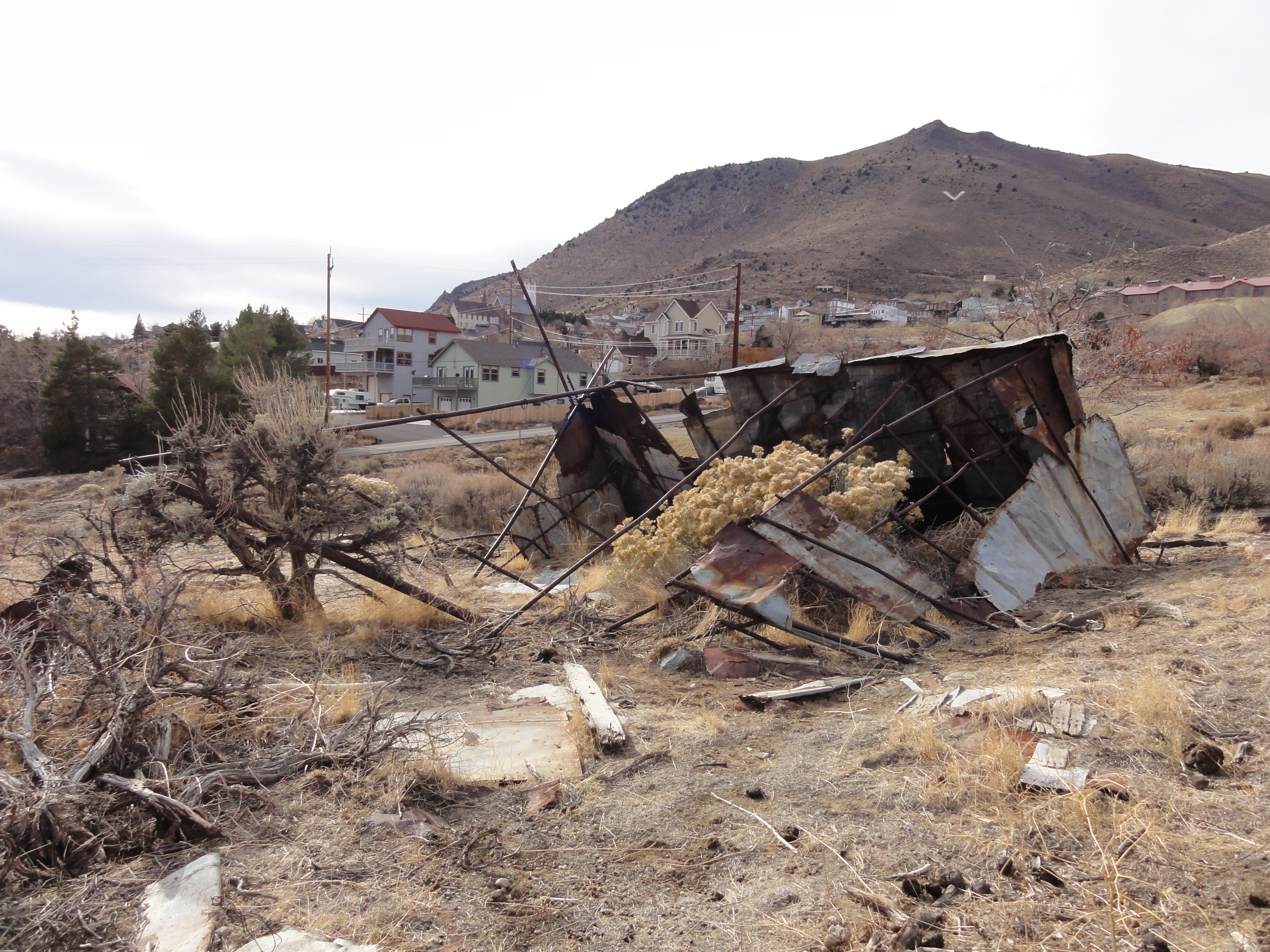
Virginia City, Nevada within the Comstock Mining District has been extensively photographed from the time silver and gold were first discovered in 1859. The subjects of the photographs are vast and include the hulking industrial shaft houses and mills; the Victorian houses, crowded commercial buildings; steam trains spewing thick black smoke; dirty hard-working miners; prominent Euro-American businessmen; and bustling street scenes. In the background of these images, Comstock photographers also sometimes preserved images of the Native American camps where people were living and working in between the mines, haul roads, and railroad tracks. These images demonstrate the cultural persistence of the Northern Paiute in the Great Basin in the face of rapid industrialization and occupation by outsiders.
To watch a video of this presentation click here.
August 25, 2026
Caliente Railroad Depot: Surviving History in Lincoln County
History Blog Article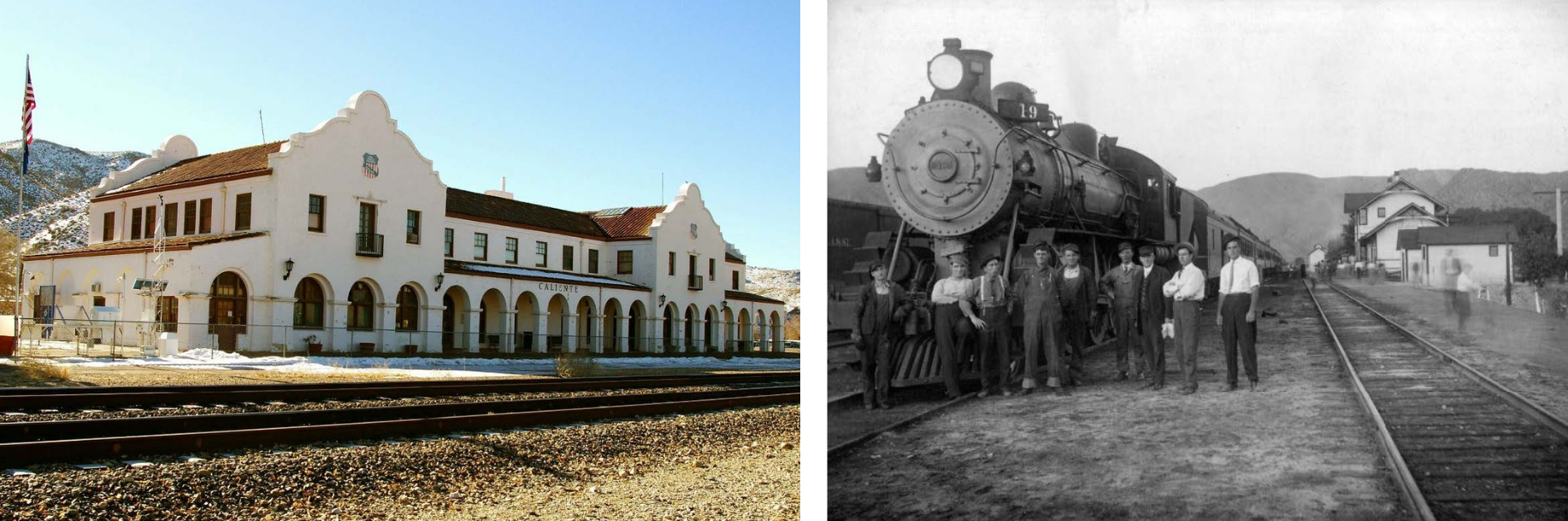 (Left side; Gabriel Kirellos, Right side; Union Pacific)
By Michael Misanik
Founded at the beginning of the twentieth century, Caliente owes much of its existence to the arrival of the Los Angeles & Salt Lake Railroad. Located in the lush Meadow Valley, the town became an important railroad hub along the line, connecting southeastern Nevada with Utah, Arizona, and California. The arrival of the railroad helped stimulate the region's mining and ranching industries, while Caliente itself developed into an important transportation and hospitality center. The town takes its name from the nearby hot springs and the Spanish word caliente, meaning "hot."
The Caliente Railroad Depot was completed in 1923 in the Spanish Mission Revival style. It was designed by the prominent Los Angeles architectural firm of John and Donald Parkinson, a father-and-son partnership whose work included numerous important buildings throughout Southern California. The imposing depot featured a substantial oak interior and cost more than $80,000 to construct.
The depot replaced an earlier railroad structure that was destroyed by fire on September 9, 1921. The new building was considerably more than a passenger station. For a time, it housed a restaurant and a fifty-room hotel, reflecting Caliente's importance as a railroad stop.
Its Spanish Mission Revival architecture makes the Caliente depot particularly distinctive among Nevada's historic railroad stations. Rather than following the utilitarian appearance common to many railroad facilities, the building was designed as an imposing architectural and civic landmark, reflecting Caliente's importance as a major railroad community.
August 21, 2026
Summer Social - Henderson

July 2026
The quarterly social was held at PKWY Tavern in Henderson, Nevada, bringing together a diverse group of professionals and community members dedicated to cultural resource preservation. Attendees included archaeologists representing land management agencies, universities, cultural resource management firms, utility companies, and the Nevadans for Cultural Preservation (NVFCP). The event also welcomed volunteers and individuals who share a passion for protecting and preserving cultural resources, providing an opportunity to connect, exchange ideas, and strengthen professional and community partnerships. We hope you'll be able to join us at our next event this fall.
July 27, 2026
Latin Chamber of Commerce: Beyond the Trail
July 2026
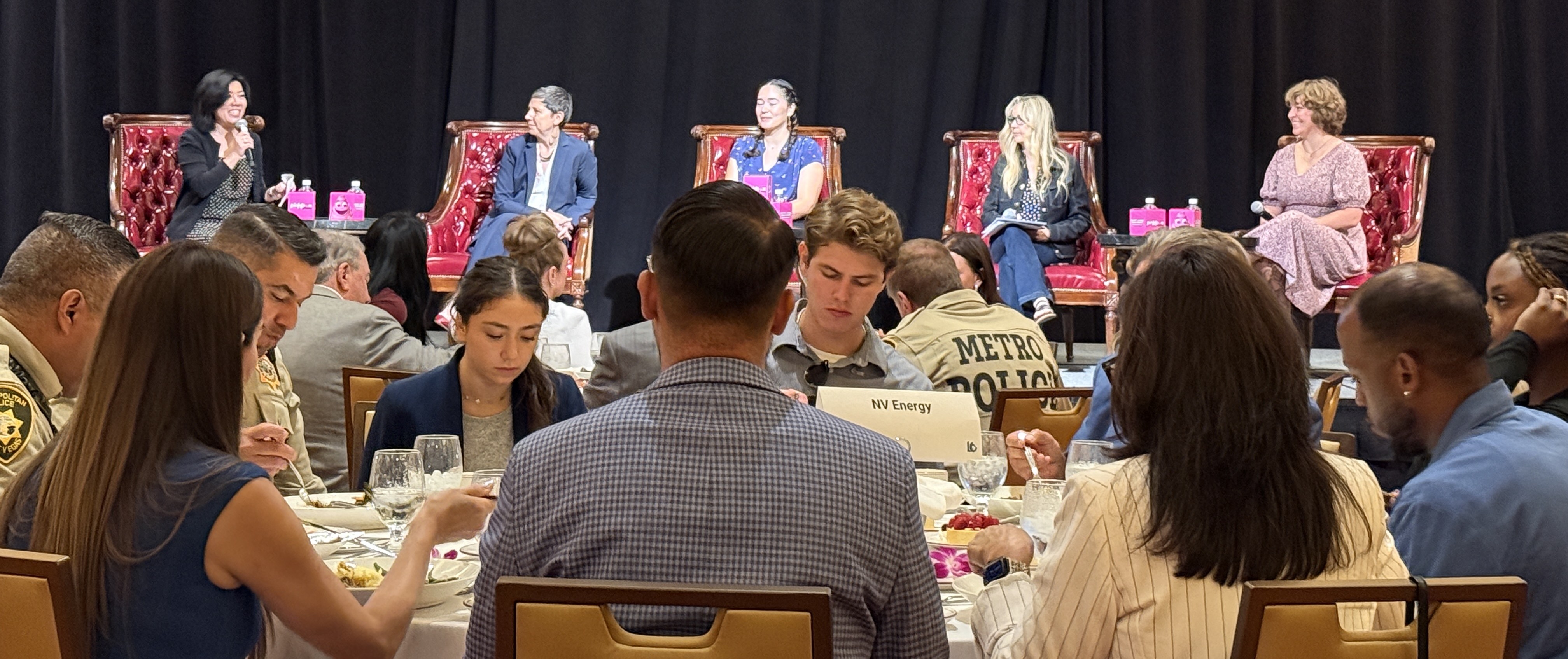
The Beyond the Trail: Building Nevada's Outdoor Future Luncheon was an excellent opportunity to share NVFCP's mission of Preservation Through Education while advocating for responsible and sustainable outdoor recreation. We are grateful to Get Outdoors Nevada for making our participation possible.
The event provided valuable opportunities to connect with business owners, community leaders, and outdoor recreation advocates from across Nevada. We were also honored to welcome Congresswoman Susie Lee, who stopped by our booth to learn more about our mission and programs.
With nearly 300 attendees, the luncheon brought together a diverse group of stakeholders invested in the future of Nevada's outdoor spaces. After attendees had the opportunity to visit exhibitor tables and network, the program featured a panel discussion highlighting the economic impact and future opportunities created by Nevada's thriving outdoor recreation economy.
The discussion, facilitated by Get Outdoors Nevada, featured speakers from the Outdoor Business Coalition, The Nature Conservancy, the Nevada Division of Outdoor Recreation, and Get Outdoors Nevada. Their insights emphasized the importance of collaboration, stewardship, and continued investment in Nevada's outdoor recreation industry.
July 27, 2026
Gold Searchers of Southern Nevada Talk
July 2026
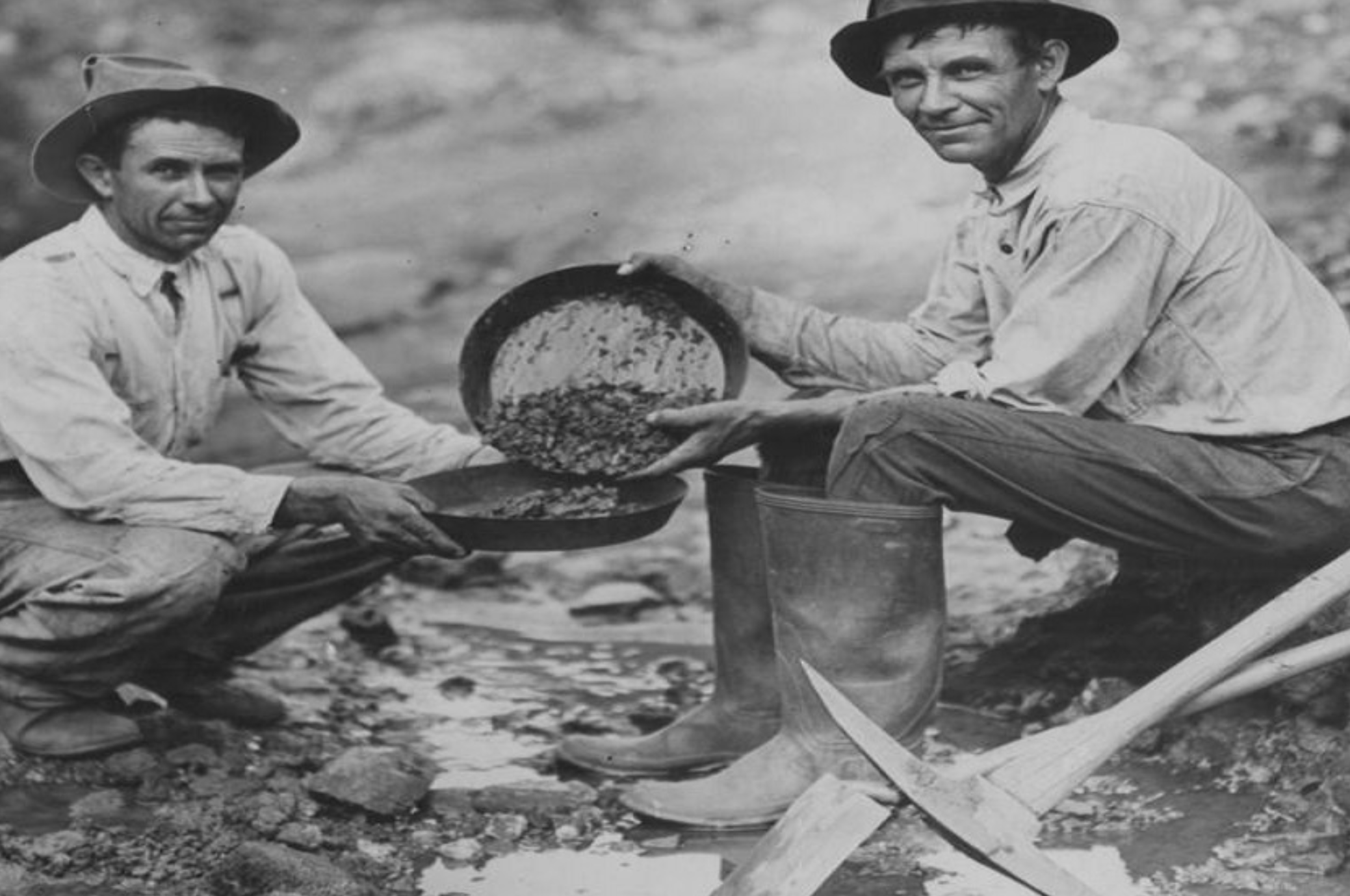
Nevadans for Cultural Preservation was invited to present at the Gold Searchers of Southern Nevada monthly meeting.
The meeting was held at the American Legion Post 40 in Henderson, where the preservation message was warmly received. Members asked thoughtful questions and shared their own experiences, leading to an engaging and informative discussion.
The Gold Searchers of Southern Nevada hosts monthly meetings and prospecting outings at several mining claims located approximately one to two hours outside of Las Vegas. Members have access to equipment such as metal detectors and prospecting gear while learning responsible recreation and stewardship practices.
In addition to supporting recreational prospecting, the club participates in community service projects and educates young people about the mining industry, minerals, and the basics of gold panning.
To learn more about the Gold Searchers of Southern Nevada, visit their website here.
July 19, 2026
Neon Dreams: Googie Architecture in Las Vegas
June 2026
Speaker Series Presentation by Sayre Borden-Historic Preservation Specialist II with Nevada Division of State Parks
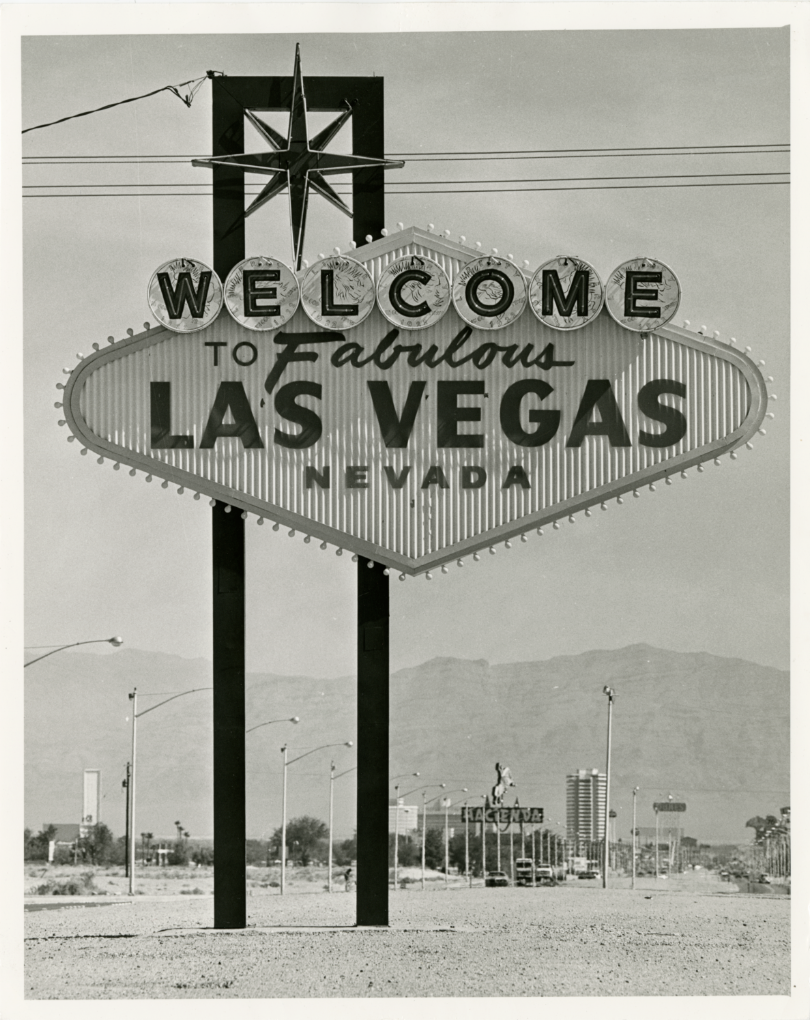
This virtual architectural walking tour explores the emergence of Googie architecture in Las Vegas during the mid-twentieth century, examining how architecture helped construct the city’s identity as a landscape of futurism, spectacle, and entertainment. Developed during the postwar boom and influenced by automobile culture, atomic-age optimism, and advances in technology, Googie architecture transformed Las Vegas into a visual symbol of modernity and fantasy.
Through a digitally guided exploration of historic casinos, neon signage, entertainment venues, and preserved architectural landmarks, this presentation analyzes defining characteristics of the style, including dramatic geometric forms, neon illumination, exaggerated signage, cantilevered structures, and futuristic imagery.
The presentation also examines the cultural and economic forces that shaped the development of Space Age design in Las Vegas, including tourism, mobility, consumer culture, and Cold War-era fascination with technology and the future. Googie architecture played a critical role in establishing Las Vegas as one of the most recognizable and visually experimental urban landscapes in the United States.
Sayre Borden is a Historic Preservation Specialist II who has been with the Nevada Division of State Parks since June 2024. Prior to that he worked as an Associate Architectural Historian with SWCA Environmental Consultants in Sacramento California. Sayre holds a Master’s Degree of Arts in Public History from California State University, Sacramento and a Bachelor’s Degree of Arts in History from Eastern Nazarene College. He lives in Las Vegas.
Image from UNLV Digital Archives
Video of the presentation can be found on our YouTube page here.
Read more
July 18, 2026
Sustaining Site Steward Programs

June 2026
Sustaining Site Steward Programs: Insights from 40 Years of the Arizona
Speaker Series Presentation by
Sean Hammond
State Coordinator, Arizona Site Steward Program
As the Arizona Site Steward Program (ASSP) celebrates its 40th anniversary in 2026, it offers valuable insights into program longevity and institutional resilience. Having weathered economic cycles spanning five calendar decades, current Site Steward Programs now face unprecedented hurdles due to federal funding cuts affecting land management partners like the BLM, U.S. Forest Service, and even non-profit preservation organizations.
Amidst these funding shifts, the ASSP Foundation, established in 2017, has emerged as a vital pillar and currently serves as the program's primary financial support. In this presentation, ASSP Coordinator Sean Hammond, now in his eighth year leading the program, will discuss the foundation’s operations, its critical role in supporting the Arizona SSP, and the strategic public outreach initiatives marking this historic 40-year milestone.
Watch a video of this presentation on our YouTube Chanel here.
July 17, 2026