Neon Dreams: Googie Architecture in Las Vegas
June 2026
Speaker Series Presentation by Sayre Borden-Historic Preservation Specialist II with Nevada Division of State Parks
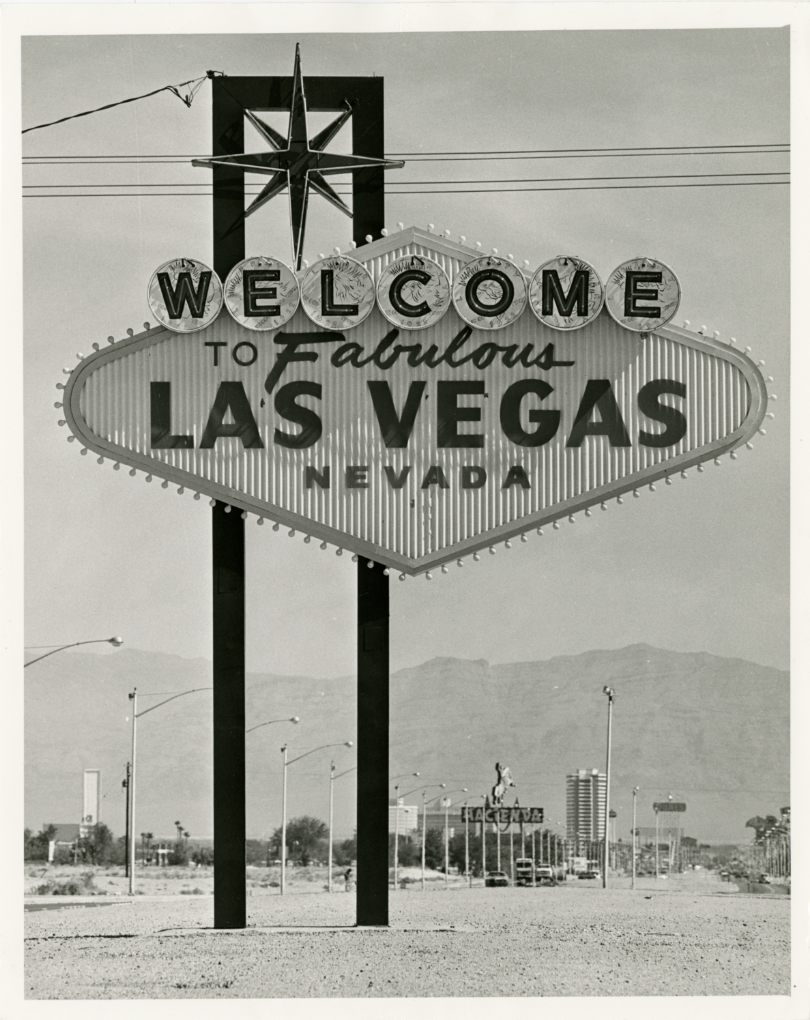
This virtual architectural walking tour explores the emergence of Googie architecture in Las Vegas during the mid-twentieth century, examining how architecture helped construct the city’s identity as a landscape of futurism, spectacle, and entertainment. Developed during the postwar boom and influenced by automobile culture, atomic-age optimism, and advances in technology, Googie architecture transformed Las Vegas into a visual symbol of modernity and fantasy.
Through a digitally guided exploration of historic casinos, neon signage, entertainment venues, and preserved architectural landmarks, this presentation analyzes defining characteristics of the style, including dramatic geometric forms, neon illumination, exaggerated signage, cantilevered structures, and futuristic imagery.
The presentation also examines the cultural and economic forces that shaped the development of Space Age design in Las Vegas, including tourism, mobility, consumer culture, and Cold War-era fascination with technology and the future. Googie architecture played a critical role in establishing Las Vegas as one of the most recognizable and visually experimental urban landscapes in the United States.
Sayre Borden is a Historic Preservation Specialist II who has been with the Nevada Division of State Parks since June 2024. Prior to that he worked as an Associate Architectural Historian with SWCA Environmental Consultants in Sacramento California. Sayre holds a Master’s Degree of Arts in Public History from California State University, Sacramento and a Bachelor’s Degree of Arts in History from Eastern Nazarene College. He lives in Las Vegas.
Image from UNLV Digital Archives
Video of the presentation can be found on our YouTube page here.
Read more
July 18, 2026
Sustaining Site Steward Programs

June 2026
Sustaining Site Steward Programs: Insights from 40 Years of the Arizona
Speaker Series Presentation by
Sean Hammond
State Coordinator, Arizona Site Steward Program
As the Arizona Site Steward Program (ASSP) celebrates its 40th anniversary in 2026, it offers valuable insights into program longevity and institutional resilience. Having weathered economic cycles spanning five calendar decades, current Site Steward Programs now face unprecedented hurdles due to federal funding cuts affecting land management partners like the BLM, U.S. Forest Service, and even non-profit preservation organizations.
Amidst these funding shifts, the ASSP Foundation, established in 2017, has emerged as a vital pillar and currently serves as the program's primary financial support. In this presentation, ASSP Coordinator Sean Hammond, now in his eighth year leading the program, will discuss the foundation’s operations, its critical role in supporting the Arizona SSP, and the strategic public outreach initiatives marking this historic 40-year milestone.
Watch a video of this presentation on our YouTube Chanel here.
July 17, 2026
Stewardship Sunday: Little Red Rock

May 2026
On another windy spring day, dedicated volunteers braved the elements to clean up trash and remove graffiti at the Little Red Rock Archaeological Area. Located on private property, this historic area has suffered damage over generations from vandalism and neglect.
Efforts like these are about more than cleanup — they are about education and preservation. We continue working to help the public understand the importance of protecting these irreplaceable cultural sites and how a few careless moments can create hours of restoration work for volunteers. Every cleanup makes a difference in preserving these places for future generations.
May 27, 2026
Homecoming and Memorial Day Weekend - Caliente, NV

May 2026
There’s no small-town celebration quite like the Memorial Day weekend in Caliente, Nevada.
The town combines high school graduation, family reunions, and Memorial Day into one lively community celebration packed with softball games, fun runs, local booths, great food, and plenty of hometown pride. Naturally, Nevadans for Cultural Preservation (NVFCP) didn’t want to miss a minute of the action.
We set up our outreach booth near the softball field on Saturday, right in the middle of the excitement. Between cheers from the games, families reuniting, and visitors strolling through vendor booths with tacos and shaved ice in hand, the atmosphere couldn’t have been more perfect.
To match the spirit of the weekend, we brought along one of our favorite outreach tools: the Lincoln County Pioneer Board Game.
The game was originally designed while working with the Nevada Site Stewardship Program. Players travel the historic 1908 roads of Lincoln County, completing missions that send them from one town to another while navigating the unpredictable realities of pioneer life. Along the way, players encounter calamities, unexpected windfalls, and the constant challenge of protecting their precious “artifact points.” The goal? Reach your destination without losing everything along the trail.
Some attendees shared memories of growing up in the area, while others were discovering local history for the very first time. That’s exactly why outreach events like this matter. Cultural preservation isn’t just about protecting the past—it’s about connecting communities to their stories in meaningful and memorable ways.
And honestly, the weather could not have cooperated better. It was a beautiful 80-degree day with a steady breeze rolling through town, making it the perfect backdrop for an afternoon filled with laughter, softball cheers, community spirit, and a little friendly competition over artifact points.
May 26, 2026
Shamrock Brothel: Photos from Bill Martin

May 2026
Speaker Series Presentation by Cynthia Sanford, Clark County Museum Registrar
In 2014, the Clark County Museum received 200 photos of the life of Bill Martin, the owner of a brothel in Amargosa Valley. While researching this man and his brothel, museum registrar Cynthia Sanford discovered his place in Nevada brothel history, and in some of its biggest scandals. In this talk, titled “Shamrock Brothel: Photos from Bill Martin,” Sanford will share some of the Martin family photos in the museum’s collection, give a brief overview of the history of legalized prostitution in Nevada, and show the progression of the Shamrock Brothel over its nearly 70 years of history.
To watch a video of this presentation on our YouTube Channel click here.
May 26, 2026
Petroglyph and Pictograph Recording
May 2026
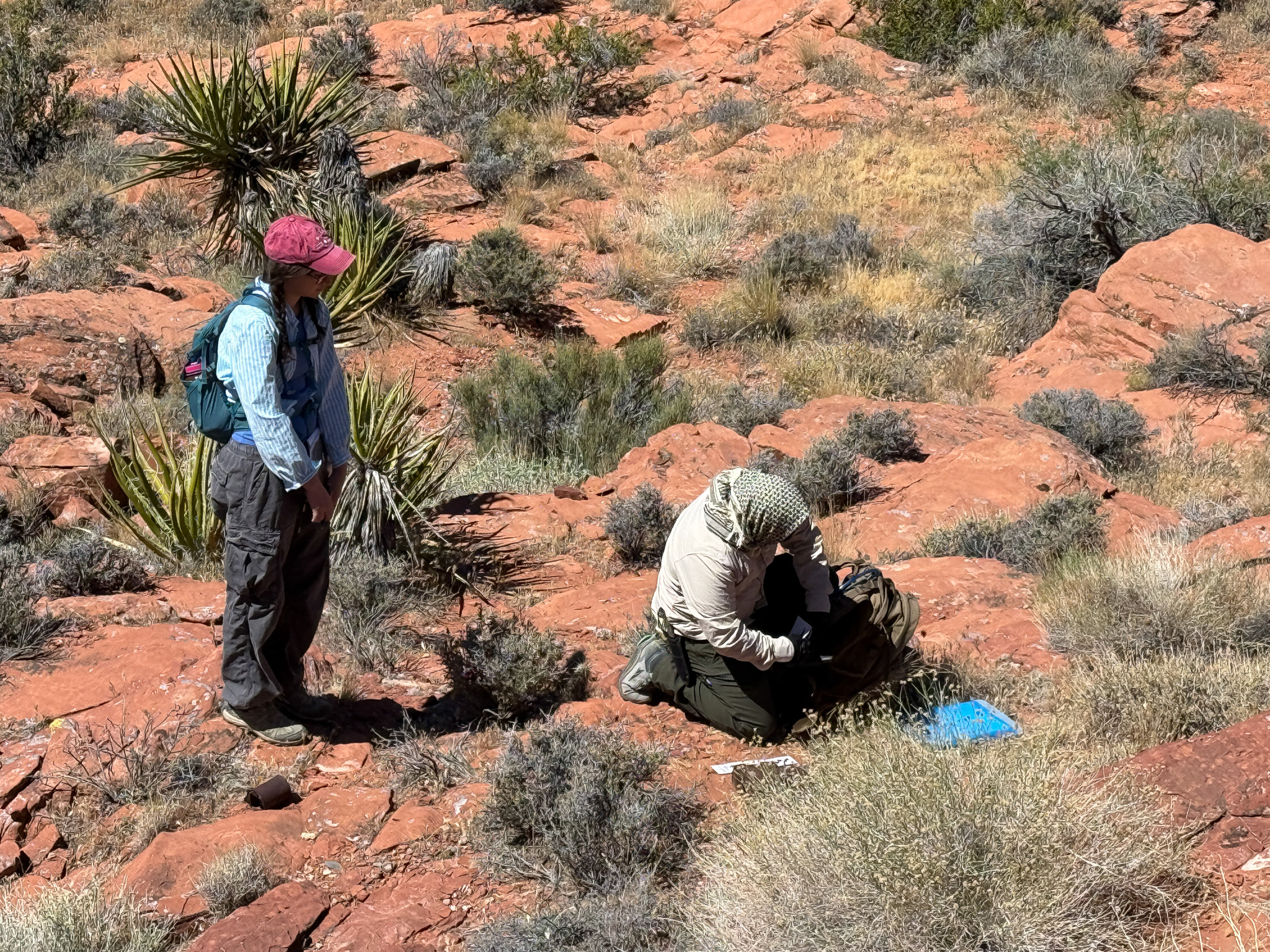
There’s something magical about standing in front of ancient rock writings and realizing you’re looking at images left behind hundreds—sometimes thousands—of years ago. This spring, Nevadans for Cultural Preservation (NVFCP) had the incredible opportunity to help preserve that history at Little Red Rock alongside Knight and Leavitt Associates.
Our mission? Update archaeological records for the site and carefully document every pictograph and petroglyph we can find.
That might sound simple until you’re hiking across rugged terrain with cameras, drones, GPS equipment, and notebooks while chasing the perfect sunlight angle for photography. Archaeology, it turns out, is part science, part art, and part adventure.
One of the most exciting parts of the project has been working with three undergraduate students from UNLV. These students have jumped headfirst into the world of cultural preservation, helping with photography, digital file management, and detailed illustration work. They’re not just observing—they’re gaining real-world field experience that will shape the next generation of preservation professionals.
And there’s a lot to learn out there.
Students are developing skills in relocating glyphs in the field, understanding how lighting can completely change the visibility of rock writing, and mastering programs like Photoshop and Adobe Illustrator to create accurate digital illustrations. Every image and drawing becomes part of a permanent record that researchers and future generations can rely on.
Past collaborations with J. H. N. Loubser PhD, RPA at Stratum Unlimited LLC taught NVFCP an important lesson: high-resolution photography and accurate illustrations matter. A lot. Tiny details can disappear over time, and once they’re gone, they’re gone forever.
That reality hit hard during our May documentation outings.
Sadly, we discovered that several pictographs and petroglyphs have completely eroded since earlier recordings. In some cases, the previous photographs and illustrations are now the only visual evidence that these images ever existed. It was a sobering reminder of how fragile cultural resources can be—and how urgent this work truly is.
To tackle some of the more difficult recording challenges, NVFCP has also been using drone technology. Drones allow us to safely document higher glyphs and massive horizontal panels that would otherwise be difficult to photograph accurately from the ground. Plus, seeing ancient rock art from above offers an entirely new perspective on how these panels interact with the surrounding landscape.
Despite the challenges, every day in the field has reinforced why this work matters. Preservation is more than documentation—it’s storytelling, stewardship, and creating a bridge between the past and the future.
At Little Red Rock, those stories are still written on the stone. And thanks to dedicated partners, students, and evolving technology, we’re doing everything we can to make sure they’re not lost to time.
Photo: Intern learning how to document historic cans from Knight and Leavitt Associate crew member
May 26, 2026
What Time Do We Eat?
April 2026
Speaker Series presentation by Sarah Branch, Broadbent & Associates, Inc.
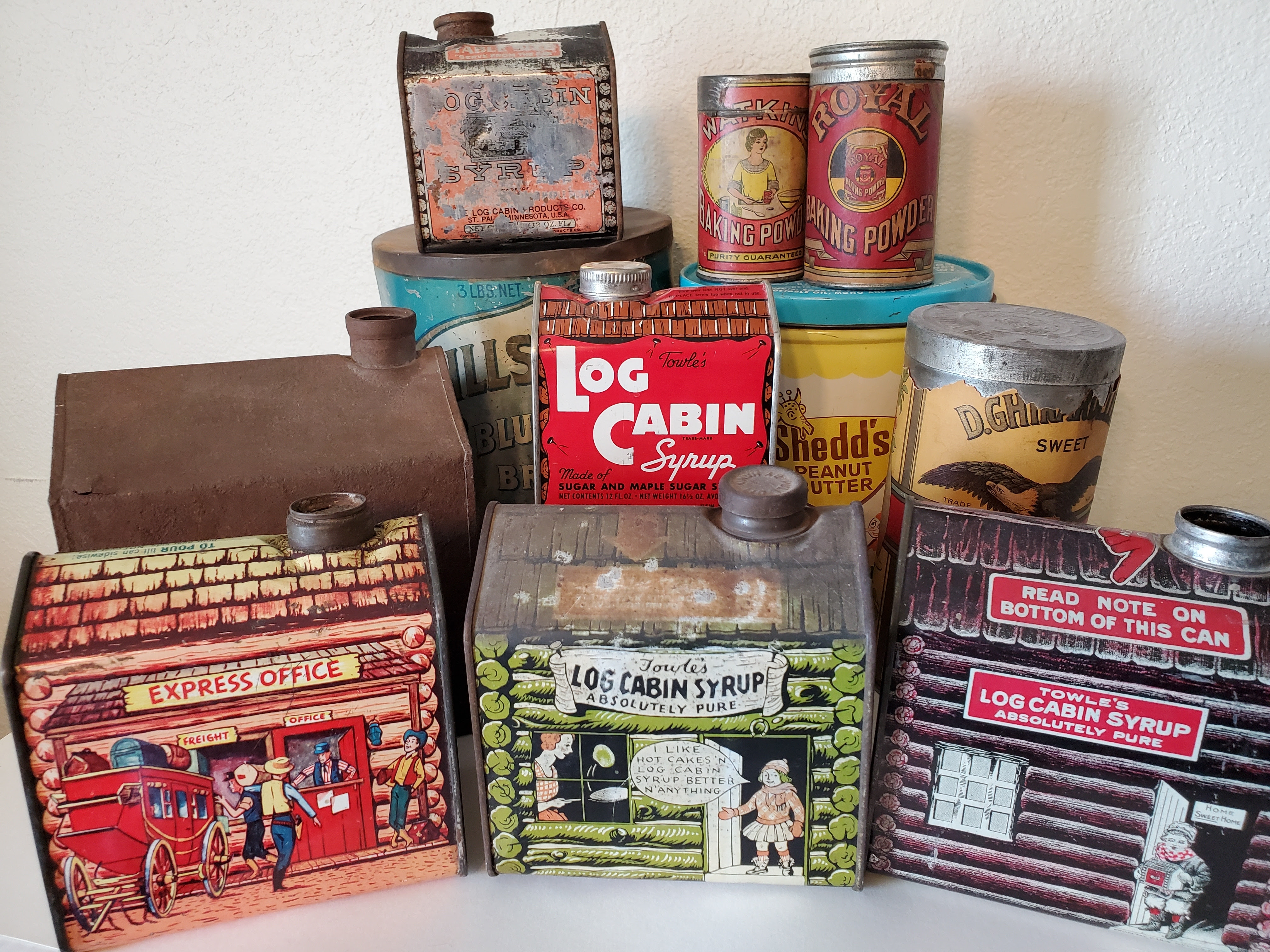
What Time Do We Eat? A Practical Chronology for Towle’s Log Cabin Syrup Cans and Other Historic Pantry Staples
When it comes to historic-period archaeological sites, the humble can scatter can provide a buffet of information about who ate what when. The Simonis (1997) condensed and evaporated milk can chronology and the Hills Bros. coffee can chronology developed by Lanford and Mills (2006) can be invaluable in figuring out when people had their meals, but what about the other cans in this hypothetical scatter? If you’re lucky, some of these cans might look like little houses. The iconic log cabin shape of Towle’s Log Cabin Syrup was patented in 1897 and used until 1956, which makes for a really long meal. Fortunately, changes in the seams, chimney-shaped spout, handle, and labeling mean that the earliest versions of the log cabin can are distinct from the versions sold after World War II and later reproductions. And just like Hills Bros., other coffee companies changed their labels and packaging just enough to tease out when in the nineteenth or twentieth century people sat down for their eggs and bacon. Using well-preserved examples of various can types, advertising images, patent information, and a generous helping of information from other researchers, I will be presenting the most helpful attributes to be noted when using can scatters to figure out when people sat down to eat.
Watch the recording on our YouTube Channel here.
April 27, 2026
Tecopa Kilns Clean Up
April 2026
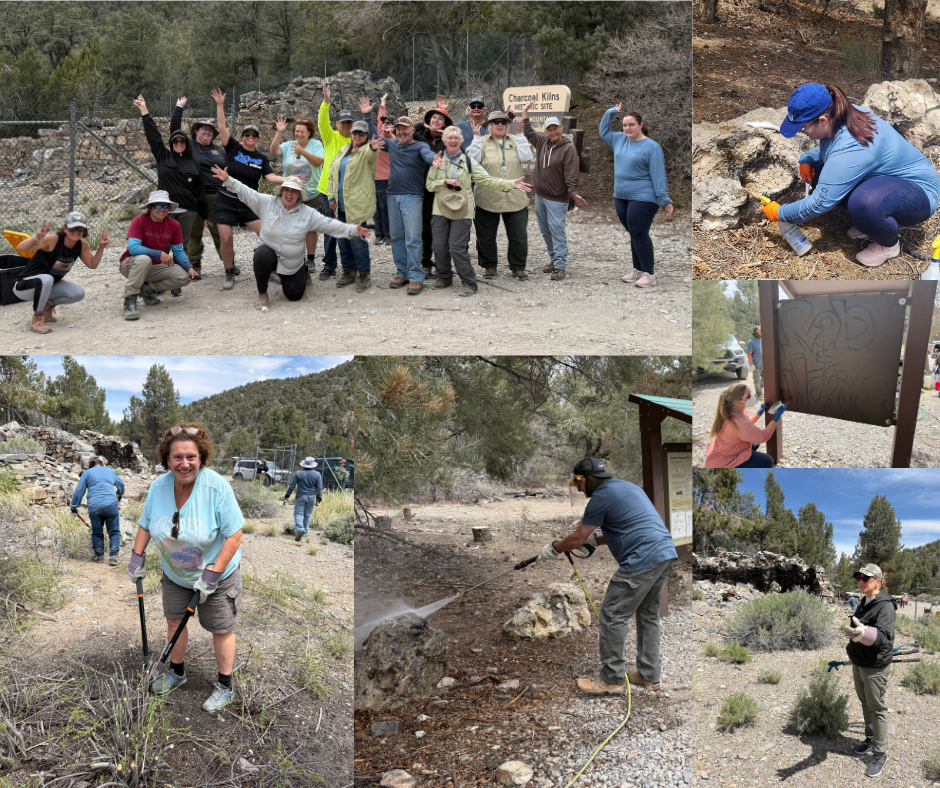
Nevadans for Cultural Preservation (NVFCP), with the assistance of Ashley Lee, organized a Tecopa Kilns Clean Up on April 25, 2026. Volunteers from NVFCP were joined by members of Dunes and Trails UTV Club, Southern Nevada Off Road Trailing (SNOT), SNOT Ladies, Big Rig Vegas Off Road, and Vegas Toyota Off Road (VTO), all coming together to support the effort.
The day’s goal was to clear vegetation from around the historic kilns and remove spray paint graffiti from parking area boulders and the informational kiosk. Volunteers met in the morning and spent the day working together to complete these important tasks.
In total, 14 volunteers participated, alongside Rayette Martin from NVFCP and three U.S. Forest Service employees. The group contributed 84 volunteer hours, reflecting the strong commitment and dedication of everyone involved.
Thanks to this collaborative effort, the Tecopa Kilns area is cleaner, better preserved, and more welcoming for visitors.
April 27, 2026
Graffiti Removal Training
April 2026
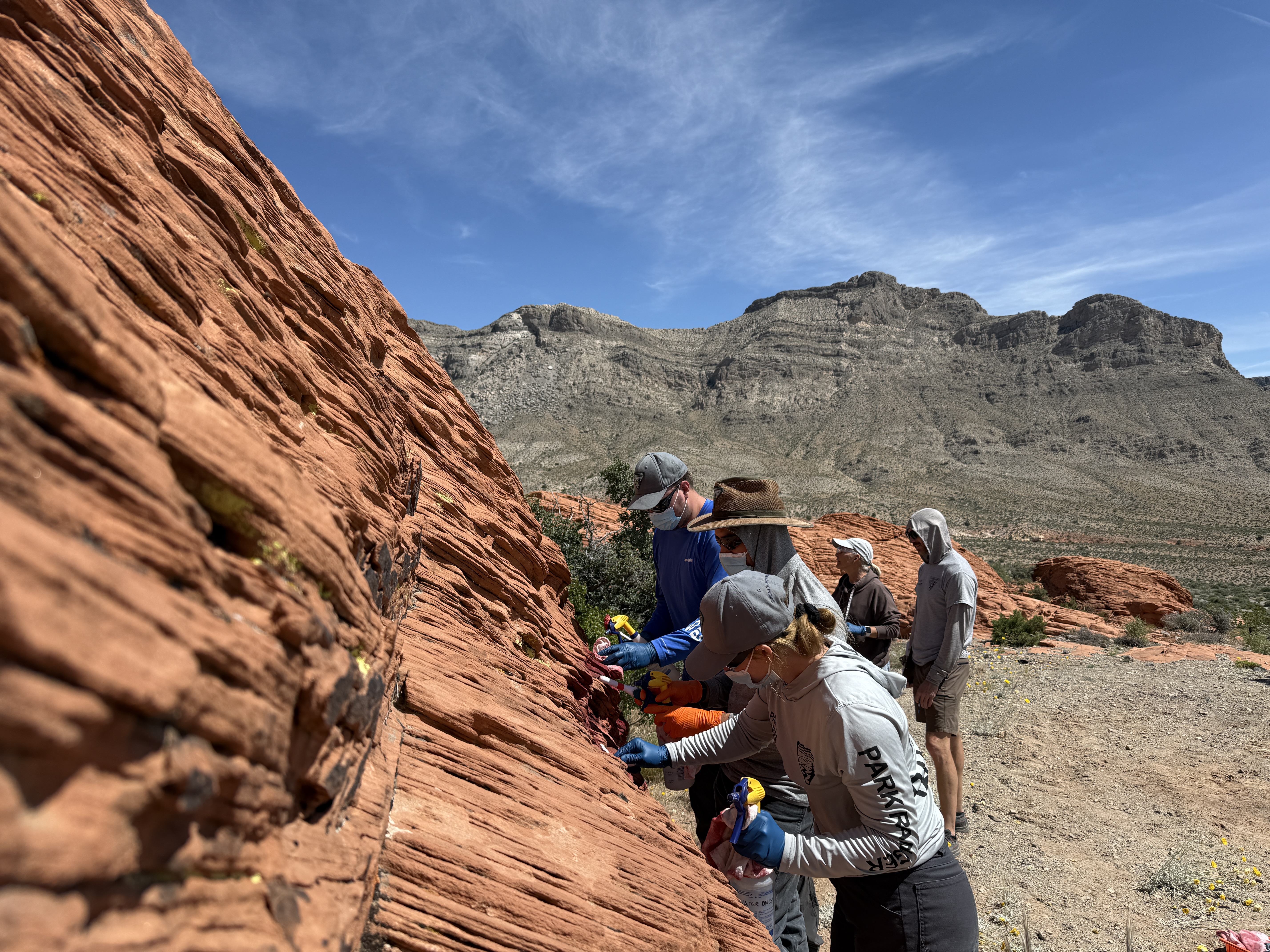
NVFCP was pleased to provide both classroom and hands-on training in basic graffiti removal for employees from the Bureau of Land Management’s Red Rock and Sloan Field Office.
We’re proud to share our experience in support of cleanup efforts across our public lands.
If you represent a land management agency and are interested in graffiti removal training, we’d love to hear from you. Please contact us at [email protected].
April 27, 2026
Social Time Spring 2026
 April 2026
This spring’s social was a great success, with attendees enjoying delicious pizza at Aces & Ales on Tenaya. One of the highlights of the evening was the opportunity to mentor a high school student interested in becoming an archaeologist—an inspiring moment for everyone involved.
It was a fun and meaningful gathering, and a great time was had by all.
We’re already looking forward to the next social in July—hope to see you there!
April 27, 2026