Speaker Series Presentation by Sarah Branch with Broadbent & Associates, Inc.
What Time Do We Eat? A Practical Chronology for Towle’s Log Cabin Syrup Cans and Other Historic Pantry Staples
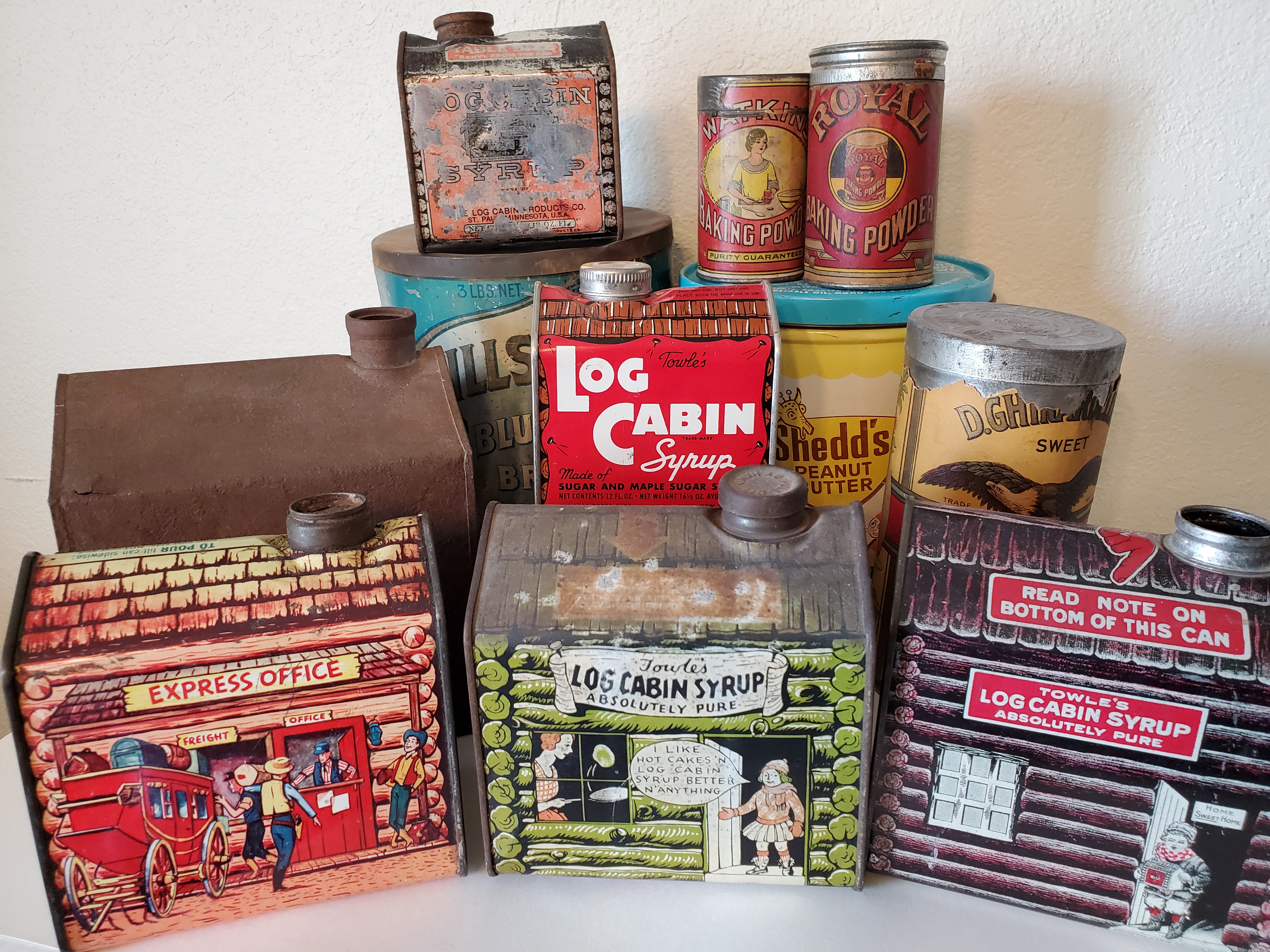
When it comes to historic-period archaeological sites, the humble can scatter can provide a buffet of information about who ate what when. The Simonis (1997) condensed and evaporated milk can chronology and the Hills Bros. coffee can chronology developed by Lanford and Mills (2006) can be invaluable in figuring out when people had their meals, but what about the other cans in this hypothetical scatter? If you’re lucky, some of these cans might look like little houses. The iconic log cabin shape of Towle’s Log Cabin Syrup was patented in 1897 and used until 1956, which makes for a really long meal. Fortunately, changes in the seams, chimney-shaped spout, handle, and labeling mean that the earliest versions of the log cabin can are distinct from the versions sold after World War II and later reproductions. And just like Hills Bros., other coffee companies changed their labels and packaging just enough to tease out when in the nineteenth or twentieth century people sat down for their eggs and bacon. Using well-preserved examples of various can types, advertising images, patent information, and a generous helping of information from other researchers, I will be presenting the most helpful attributes to be noted when using can scatters to figure out when people sat down to eat.


Who's RSVPing
Showing 13 reactions