
October 2026
NVFCP was honored to host a roundtable discussion at this year’s annual Nevada Museum Association Conference in Mesquite, Nevada. The discussion focused on a growing challenge facing museums and cultural institutions: What happens when people inherit archaeological collections and don’t know what to do with them?
NVFCP opened the discussion by sharing a Facebook post from an individual who had inherited his father’s and grandfather’s collection of Native American stone tools. He wanted to know what to do with the artifacts but was not interested in selling them.
The responses to his post varied widely. Many commenters expressed frustration with museums for accepting objects that never make it onto public display. Others encouraged him to donate the collection to a museum, believing it would make a valuable exhibit.
However, the museum professionals in the room understood that the reality is more complicated. Artifacts removed from their original archaeological context are often difficult to interpret and may not be suitable for museum display. Museums operate under specific missions, and every object they acquire comes with a responsibility to document, preserve, and care for it. Acquisitions require appropriate storage space, funding for collections care, and a clear reason for accepting an object. While some artifacts may be suitable for teaching collections, those collections also have limitations on what they can accommodate.
With representatives from numerous museums and related organizations in attendance, participants shared stories of artifacts and collections arriving unexpectedly—left on doorsteps, mailed to institutions, or bequeathed in wills without any prior communication. They also described phone calls from people who genuinely wanted to do the right thing but, after contacting multiple institutions, had been turned away and were left wondering what to do next.
Although our one-hour discussion did not produce a definitive set of answers or guidelines, it provided a valuable opportunity to connect with colleagues, share concerns about the growing number of artifacts removed from their original context, and recognize the need for a coordinated approach to this issue.
So, what does ethical inheritance look like? How can we help people make informed decisions about inherited archaeological collections while respecting cultural heritage, supporting responsible stewardship, and acknowledging the limitations museums face?
NVFCP will continue collaborating with the professionals who participated in this discussion, along with other interested partners, to explore solutions and develop a protocol for Ethical Inheritance. Our goal is to help individuals navigate these difficult decisions and find responsible pathways for inherited collections, rather than allowing them to be discarded, forgotten, or lost.
This is an important conversation, and we look forward to keeping it going.
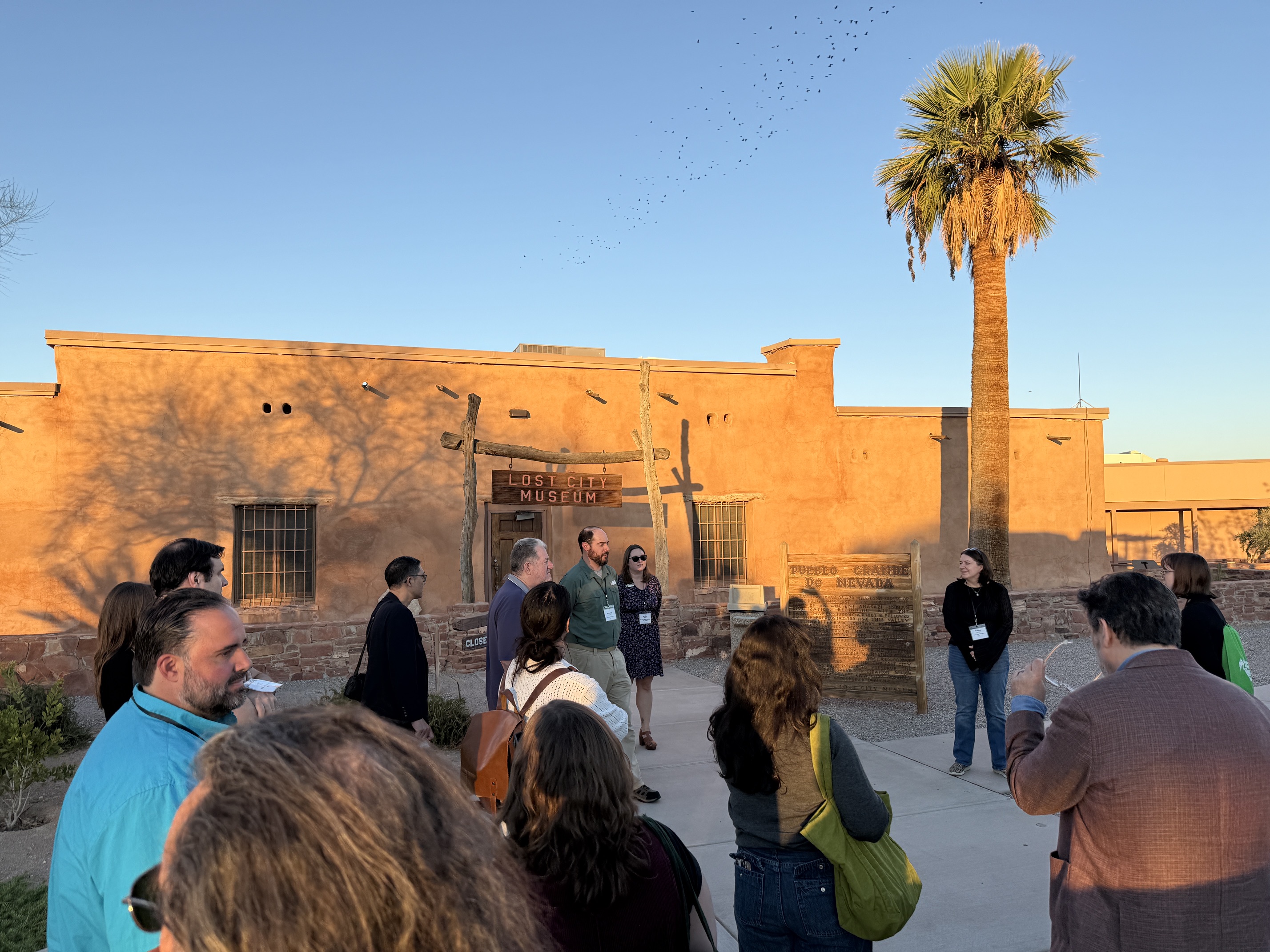
Photo: Conference attendees at a tour of the Lost City Museum.
Showing 1 reaction